


One Tenth of a Second, One Yard of Separation: Why Speed Is the Skill Young Athletes Cannot Ignore
Youth Sports, Speed Training, PhenixFitt
One Tenth of a Second, One Yard of Separation: Why Speed Is the Skill Young Athletes Cannot Ignore
Speed is not just about looking fast. Speed is about creating separation when the moment gives you almost no time to think. In sports, the difference between open and covered, safe and out, caught and gone, roster spot and almost-made-it can show up in a fraction of a second.
That is why the core idea matters: one tenth of a second can equal one yard of separation. In short explosive movements — the first few steps that decide a route, a closeout, a breakaway, or a recovery angle — 0.1 seconds is not tiny. It is visible space. It is game-speed math. It is the moment where one athlete arrives and another athlete reaches.
PhenixFitt's speed preview site frames the mission clearly: build faster, more explosive athletes through speed training, sprint mechanics, movement analysis, and injury prevention for middle school and high school athletes. The site also says what too many athletes know: most kids are told to "get faster," but almost nobody teaches them how to sprint. PhenixFitt's answer is direct: stop guessing and start developing.
Can Speed Actually Be Taught?
The myth says, "You can't teach speed." That myth is convenient, but it is wrong. Nobody would tell a young basketball player that shooting cannot be coached. Nobody would tell a quarterback that throwing mechanics do not matter. Yet when it comes to sprinting, the movement skill underneath almost every sport, too many athletes are left to figure it out alone.
The answer is yes — speed can be taught because sprinting has mechanics. Acceleration has body angles. Force production has direction. Arm action has rhythm. Posture affects efficiency. Foot strike affects how quickly an athlete can apply force into the ground and return to the next step. PhenixFitt's sprint mechanics focus includes work on stride efficiency, posture mechanics, force production, and arm action.
"They call it coaching but it is teaching. You do not just tell them…you show them the reasons." — Vince Lombardi
That quote fits speed training because telling a kid to "run faster" is not coaching. Coaching is showing what the body is doing, why it matters, and how to correct it. Speed Workouts by PhenixFitt — Level 1 begins with a FREE Assessment that includes a baseline time and running form analysis. Development should not start with guessing. It should start with measurement.
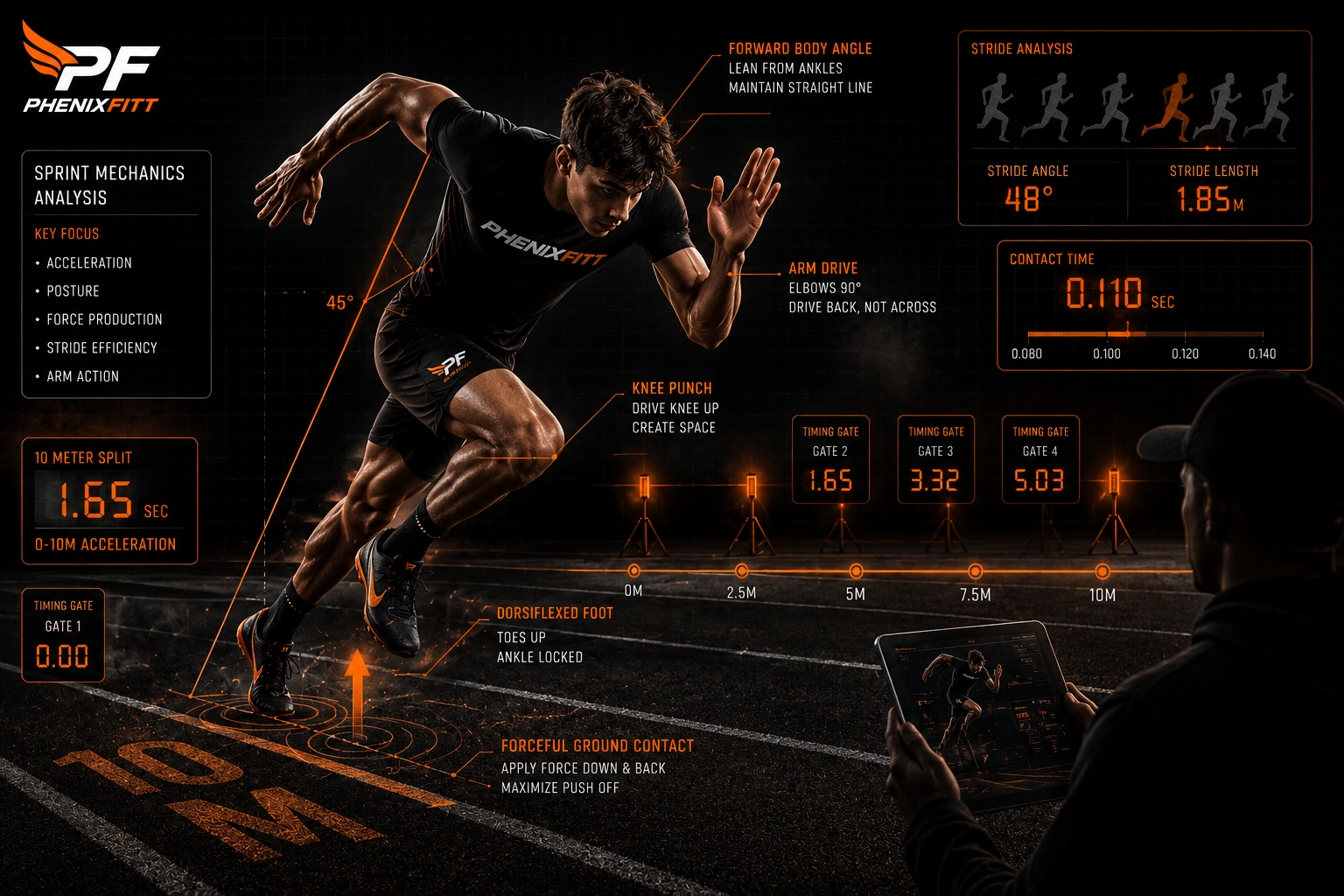
Clean sprint mechanics turn vague effort into measurable, coachable speed.
How Much Does One Tenth of a Second Really Matter?
A tenth of a second sounds small until it shows up on film. In a short burst, that tenth can become a yard. In football, it is the receiver stacking the defender instead of getting squeezed to the sideline. It is the linebacker closing the gap before the running back turns the corner. It is the defensive back recovering before the ball arrives. It is the first step that decides whether the play opens or closes.
The improvement is proportional over distance, but the principle is simple: small measurable changes create real competitive separation. If two athletes start side by side and one becomes more efficient in the first five to ten meters, the difference appears quickly. The athlete who wins the first few steps often controls the rest of the play.
This is not only a football idea. Basketball players need burst in transition, closeouts, cuts, and recovery. Soccer players need first-step explosiveness and repeated game-speed movement. Baseball and softball players need acceleration on the bases and closing speed in the field. PhenixFitt's Youth Speed & Agility system develops first-step explosiveness, change of direction, and game-speed reactive movement.
"It's better to look ahead and prepare, than to look back and regret." — Jackie Joyner-Kersee
That is the message for parents and athletes right now. Do not wait until the season exposes the gap. Do not wait until tryouts reveal who has been working. Do not wait until recruiting starts and measurable numbers are already part of the evaluation. Look ahead, measure the baseline, correct the mechanics, and build the speed before the moment demands it.
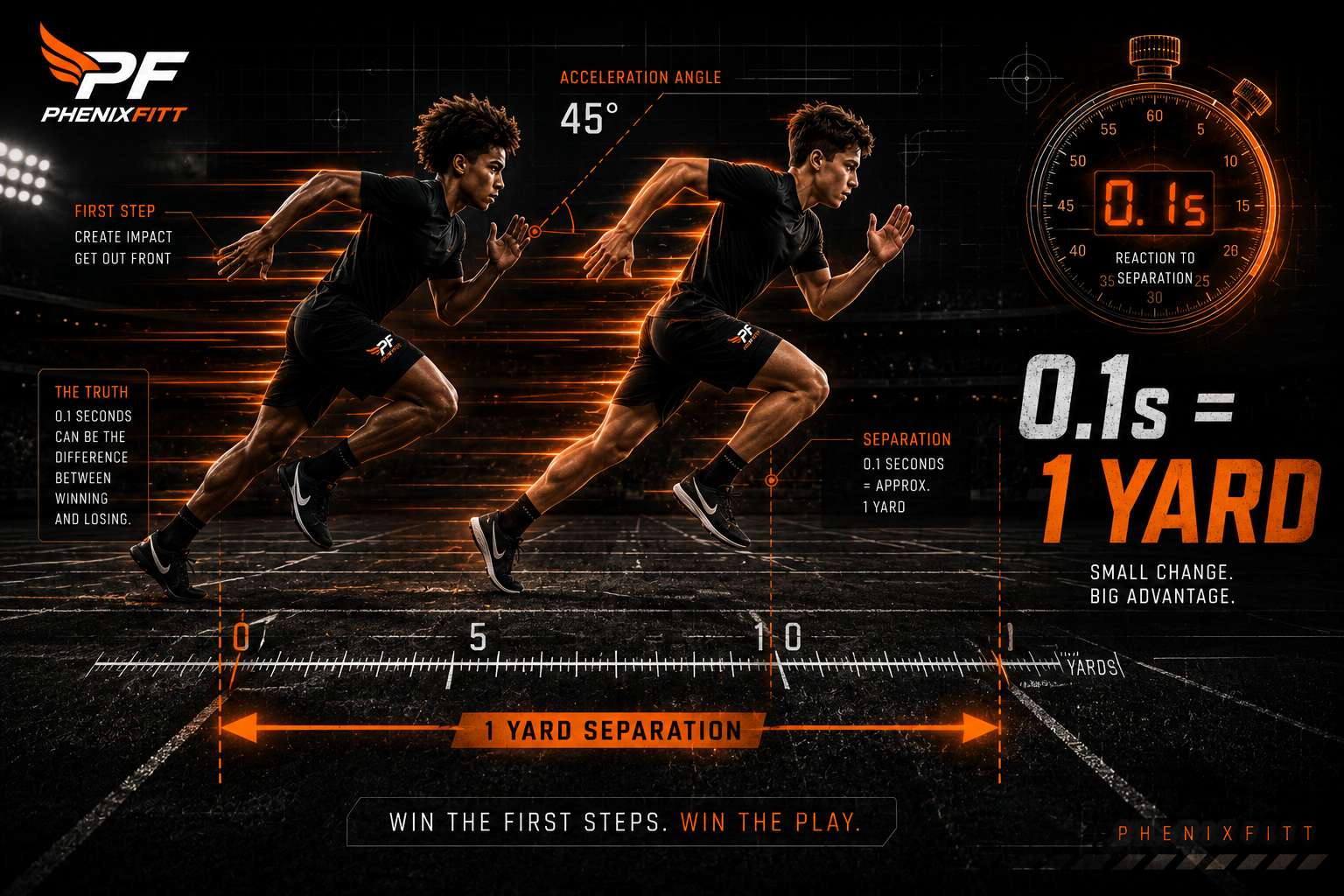
One tenth of a second becomes visible separation long before the finish.
What Makes Speed Training Different From Regular Conditioning?
Most young athletes already work hard. They go to practice. They condition. They hustle. But team conditioning and speed development are not the same thing. Conditioning can make an athlete tired. Speed development teaches an athlete how to produce force, apply it in the right direction, hold better positions, and repeat quality movement without wasted motion.
That is the difference. Speed Workouts by PhenixFitt — Level 1 is a focused program designed for middle school and high school athletes across all sports. It begins with a FREE Assessment that captures baseline timing and running form analysis, then moves into sprint mechanics, form coaching, drills, and the foundations that help an athlete run with purpose.
PhenixFitt's environment is a movement lab built around structured progressions, individualized coaching, laser-timed sprint analysis, video movement breakdown, and performance data tracking. Young athletes do not need more random reps. They need the right reps. They need feedback. They need to understand what is changing and why.
"The triumph can't be had without the struggle." — Wilma Rudolph
Improving speed takes work, but it should not be blind work. When an athlete learns how to accelerate, control posture, drive the arms, attack the ground, and relax at the right time, the work becomes more than effort. It becomes skill acquisition.
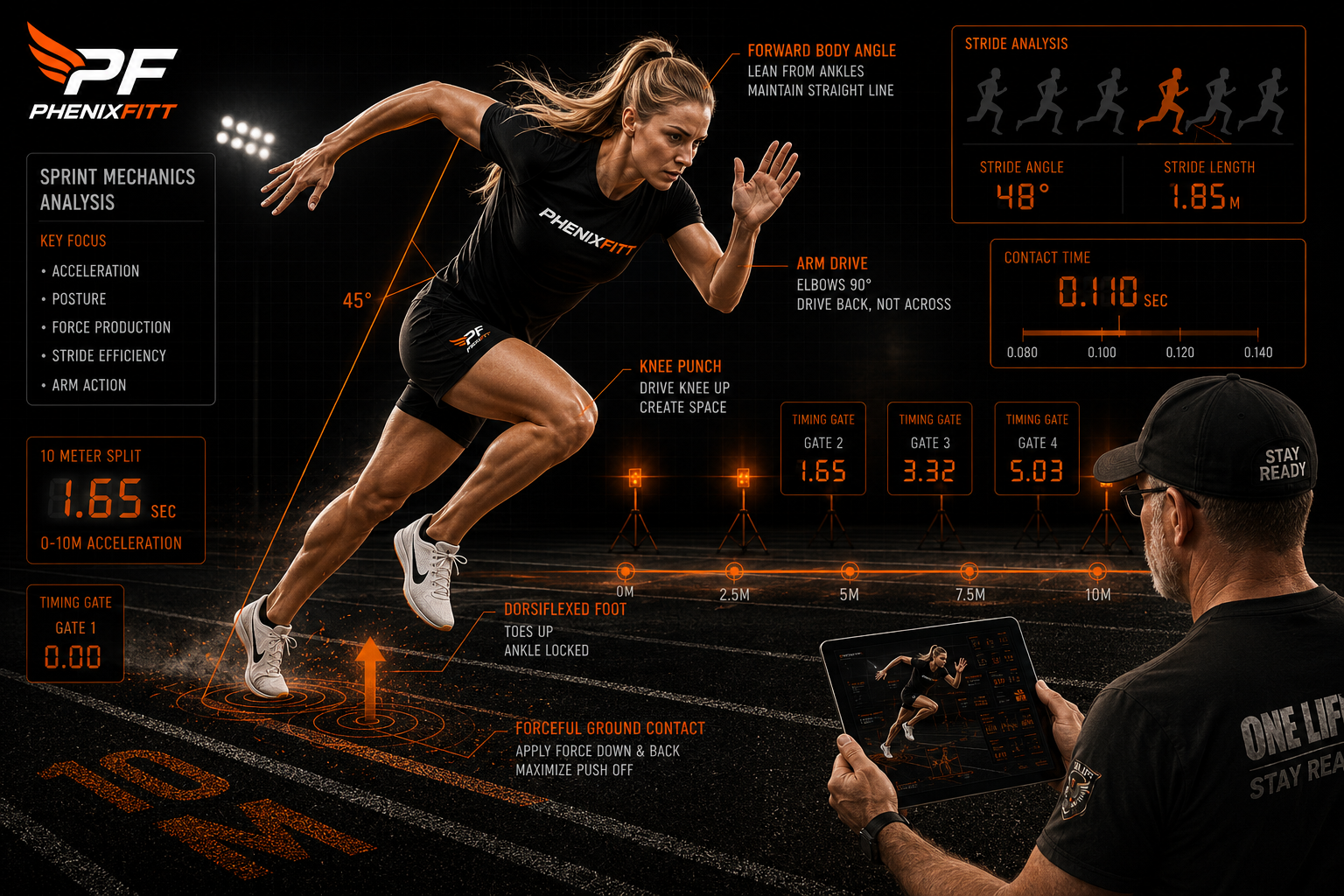
Data, video, and timing turn hard work into targeted speed development.
Is the Athletic Window Closing?
Middle school and high school sports move fast. One off-season becomes one season. One season becomes a varsity decision. One missed development window becomes a bigger gap. By the time an athlete is being compared on film, in tryouts, at camps, or in recruiting conversations, speed is already part of the story.
That is why the first step is simple. Book the FREE Assessment. Let PhenixFitt measure the baseline, analyze the running form, and show the athlete what needs to change. From there, Level 1 gives athletes a focused foundation to learn sprint mechanics, sharpen acceleration, and build movement skill that transfers across sports.
One tenth of a second can be one yard of separation. One yard can be the play. One play can change the game. The question is whether your athlete will keep hoping for speed or start training it.
Book the FREE Assessment today.
PhenixFittSpeed.com | 833-308-1776 | FREE Assessment
One Life. Stay Ready. — C. Ray
