
The Floor Is the Most Underrated Piece of Fitness Equipment You Own
The Ground Tells the Truth
There is a reel from Kevin Cronin of Restore Movement that does not need music to make its point. A man moves on the floor. He rolls. He kneels. He sits cross-legged. He stands. He comes back down. No machines. No hype. No punishment. Just a grown man showing that the body still knows how to get home when we stop locking it in chairs all day.
Then he says the line that sits heavy. If we look at why people end up needing care, he says, a major issue is that they cannot get up and down off the ground independently. Whether that exact ranking is debated in medical language or not, the warning is plain. Losing the floor is not a small thing. Losing the floor means losing options.
That is the part most people do not want to look at. They want to talk about age. They want to talk about injuries. They want to talk about what they used to do. But the body keeps receipts. It remembers what you ask from it. It also remembers what you stopped asking from it.
Most people do not lose physical ability because one dramatic thing happened. They lose it from neglect. Quiet neglect. Years of couches, office seats, car seats, soft beds, elevators, and routines built around never touching the ground unless something has gone wrong.
“You don’t have to be great to start, but you have to start to be great.” — Zig Ziglar
Floor sitting is not glamorous. It is not advanced. It is not a full program with a perfect starting date. It is a start. And for many adults over 40, a start is exactly what has been missing.
We Did Not Outgrow the Floor

Cronin says floor sitting is something we always used to do. That matters. Not because modern life is evil. Modern life has saved time, labor, and pain in a thousand ways. But convenience always sends a bill. One of those bills is that we stopped occupying the low positions the human body was built to visit.
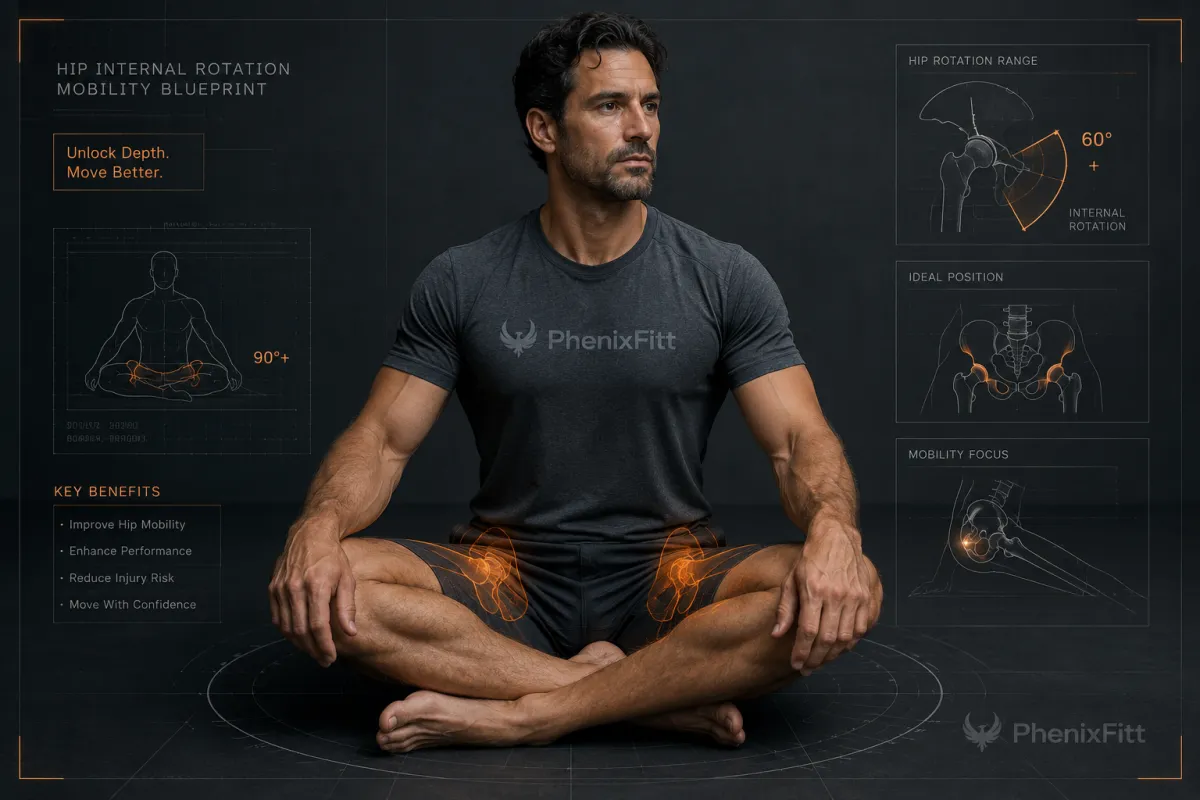
Sit with your legs straight out. Sit cross-legged. Kneel for a while. Shift to side-saddle. Lean on one hand. Change sides. Get uncomfortable, then adjust. That is not a workout in the usual sense. It is a behavior. It is a daily vote for keeping range, balance, patience, and trust in your own joints.
There is a difference between exercising for thirty minutes and living in a way that keeps your body useful. A person can finish a hard workout, then spend the rest of the day trapped in the same seated shape. The body will adapt to the dominant signal. If the strongest signal is sit high, avoid the ground, never bend deeply, never rotate, never kneel, then the body listens.
Activities of daily living are the ordinary tasks that keep a person independent, including bathing, toileting, dressing, eating, and moving or transferring from one place to another. That last one deserves respect. Moving from one position to another is not a small detail. It is life. Bed to bathroom. Chair to standing. Ground to feet. Independence is built out of transfers.
This Is a Behavior, Not a Workout

The mistake is thinking every useful thing has to be turned into exercise. That is how people get stuck. They hear floor sitting and immediately want sets, reps, timers, levels, and rules. They want the perfect posture. They want to know if five minutes counts.
Yes, five minutes counts.
The point is not to perform the floor. The point is to return to it. Fold laundry there. Watch a show there. Read there. Take a phone call there. Play with your grandchild there. Sit on a folded blanket if the floor is too hard. Use a couch, chair, or wall to get down and back up. There is no shame in using support. Support is how you build a bridge back to something you gave up.
A brief floor-rise training study in older adults found that practicing getting up from the floor improved floor-rise times from supine, sitting, and kneeling positions; after the intervention, all participants in the floor-rise training group could rise from supine compared with fewer in the control group. That does not mean everybody should drop to the ground unsupervised or force painful movements. It means practice matters. The body becomes more capable at the things it safely repeats.
“Action is the foundational key to all success.” — Tony Robbins
That quote is not about screaming at yourself. It is about doing the small thing before your mind turns it into a courtroom. Sit down. Shift positions. Breathe. Stand back up when you are ready. Tomorrow, do it again.
Independence Is Trained Before It Is Needed
There is a cold truth in all of this. You do not rise to the level of independence you imagine. You fall to the level of movement you maintained.
Life is kind enough to give warnings. The first warning might be that sitting cross-legged feels impossible. The second might be that kneeling makes you nervous. The third might be that you avoid getting down to reach something because you already know getting back up will cost too much. None of those moments mean you are done. They mean the bill is arriving while there is still time to pay it down.
Most adults wait until the floor becomes an incident. A fall. A dropped object. A grandchild asking them to play. A doctor's office question. A moment of embarrassment they carry quietly. But readiness is not built in the emergency. Readiness is built on normal days, when nobody is watching.
Start where you are. If the ground feels too far away, use a sturdy chair and practice lowering to a higher surface first. If the knees complain, use padding. If the hips lock up, widen the position. If balance is uncertain, stay near support. If pain is sharp, unusual, or worsening, do not force it. Get help from a qualified professional.
“Don’t wish it was easier, wish you were better.” — Jim Rohn
That line is not saying ignore pain. It is not saying shame yourself. It is saying stop building your life around the hope that everything gets softer. The stairs may not get lower. The bathtub may not get wider. The floor may not get easier. But you can get more prepared.
Stay Ready Means Stay Close to the Ground

That preparation begins with small contact. Sit on the floor once today. Change positions twice. Stand up with as much help as you need and as much control as you can own. Tomorrow, repeat it. Over time, add variety. Long sitting. Cross-legged. Kneeling. Half-kneeling. Side-saddle. Hands-and-knees. Squat only if it is available and safe. The order matters less than the return.
You are not trying to win mobility. You are trying to stop abandoning it.
There is something humbling about sitting on the floor as an adult. It strips away the image. It does not care what you used to bench, how fast you used to run, what sport you played, or what size jeans you wore at 25. It asks a better question. Can you still live in your body?
If you are 40, 50, 60, or beyond, and you feel stiff, heavy, inconsistent, or tired of starting over, do not begin by declaring war on yourself. Begin by restoring contact. Put your body in more shapes. Spend more time near the ground. Let the floor teach you what needs attention. Then train from there.
This is not anti-gym. This is not anti-strength. This is the foundation under all of it. A body that cannot access the ground is already negotiating with life. A body that can lower, sit, shift, kneel, brace, roll, and rise has more choices. More choices mean more dignity. More dignity means more freedom.
At PhenixFitt, that is the work. Not chasing pain. Not chasing punishment. Not pretending motivation will save you. We build the kind of body that can answer when life calls. Mobility first. Strength that transfers. Conditioning that serves the day. Habits that do not need applause.
Tonight, sit on the ground. Not for a perfect program. Not for a picture. Not to prove anything. Sit there because your independence is worth small daily acts of respect. Sit there because the body keeps what it uses. Sit there because one day, getting back up may mean more than finishing a workout.
The floor is not beneath you. It is waiting for you.
For coaching, mobility-first training, and a practical path back to readiness, visit phenixfitt.com or call 833-308-1776.
One Life. Stay Ready. — C. Ray
